A municipality has an outdated wastewater lift station. The pumps are approaching the expiration date of their service lifespan, the controls require modernization as well as the access hatch has deteriorated. The concrete wet well is sturdy and solid.
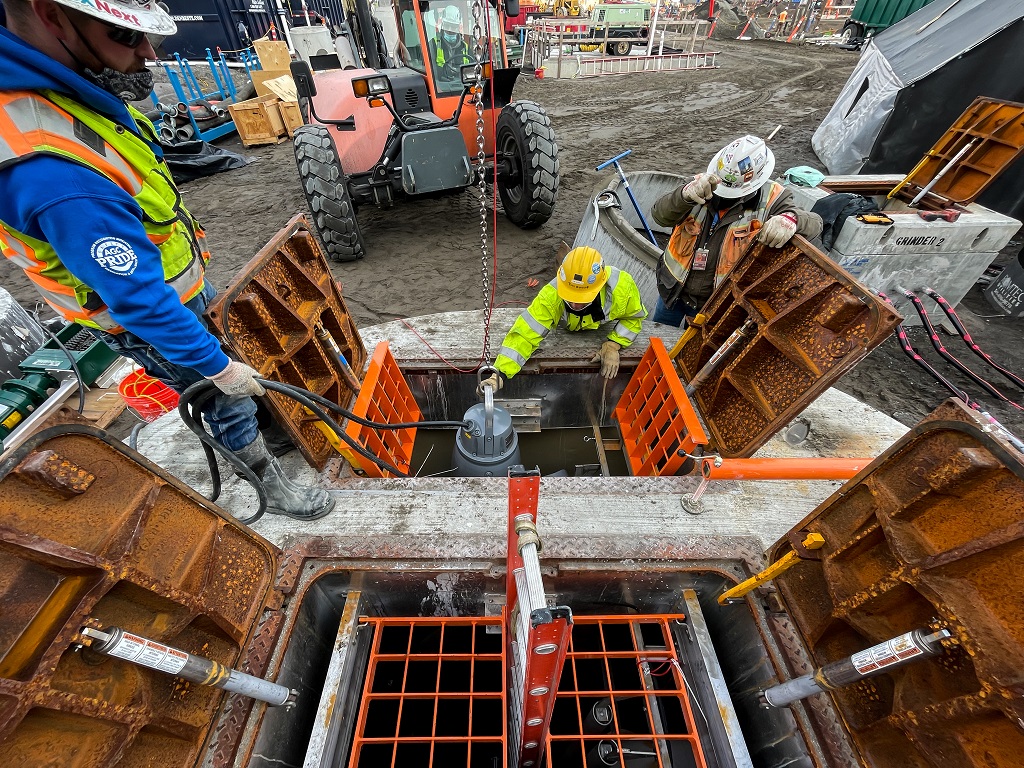
Image credit: romtecutilities.com
Should the entire station be demolished and rebuilt? Not necessarily. The more important issue is whether the current infrastructure will be able to accommodate a modern pumping system without compromising availability, reliability or capacity in the future.
Retrofitting the pumping station precisely designed can help save infrastructure, while also replacing components that are no longer meeting operational requirements.
Start with the Structures That Nobody Will Want to Replace
It’s expensive and time-consuming to replace the wet-well because it is in the ground, connected to pipes and is vital for wastewater collection.
Retaining the concrete structure could help in reducing excavation work and construction.
But, any deterioration that occurs around the access hatch may complicate the decision. Romtec Utilities identifies wet well hatch replacement as a standard retrofit requirement. It might be more reliable to remove the top slab instead of installing a brand new hatch on deteriorated concrete. This option can ease access and increase the usefulness of the structure without re-building the entire wet well.
A More Powerful Pump Changes the Engineering
Imagine that the area of residence has increased significantly since the initial lift station installation. It could be that the existing pumps are no longer able to handle increased water flow.
The upgrading of a pumping device could include more horsepower, but this can’t be accomplished without taking into consideration the system around it. More powerful pumps may require adjustments to elbows for discharge, piping valves, electrical control and other elements.
Engineers should also evaluate the hydraulic requirements of the system, such as the flow rate as well as the dynamic head total. In the event of installing a larger pump, not taking a look at these requirements could cause problems with operation rather than addressing these. Planning for future capacity during the initial design phase can make later expansion considerably easier.
Check that the waste water is flowing throughout construction
A wastewater pump station retrofit introduces a challenge that ordinary equipment replacement projects may not face: the station may need to remain operational throughout construction.
Contractors are still working, and wastewater will still arrive. According to the project it is possible that a temporary bypass pumping system could be needed to keep service running while existing equipment is removed or new equipment is installed.
Romtec Utilities fought this kind of challenge in the Federal Law Enforcement Training Center at Brunswick, Georgia.
The project required replacing two outdated wastewater lifting stations while operating the facility. Specific engineering for the site packages, bypass pumping techniques allowed for the existing station footprints as well as operational needs. This example shows why it is crucial to think about the sequence of construction before constructing.
In the event that replacement is not an option, it’s the best alternative
Not every station is suited to be renovated. Sewer lift stations could need to be rebuilt in the event of a badly damaged wet well or a lack of structural capacity.
In making a decision, it is important to consider the structural condition of the structure, its compatibility with equipment, accessibility to construction, service continuity as well as long-term requirements. Romtec Utilities begins retrofits and replacements by identifying components that are to remain and those which need replacement.
The company designs site-specific engineering solutions, preliminary designs, and budgetary estimates. Prefabricated components can assist in simplify installation and decrease construction on site.
The Project Isn’t Finished When the Pumps Begin to Run
Modernized lift stations must be operated as an integrated system. Prior to returning it back to normal service, it is necessary to start testing and commissioning ensures that the controls, pumps as well as the equipment that is associated with them, are in accordance to the established design.
Operator training, as well as maintenance and operation manuals are equally crucial. Maintenance personnel must know the latest equipment, operating procedures, and the documentation prior to taking over for the station.
Retrofitting infrastructure can preserve its value while addressing limitations that led to modernization.
For facility owners and municipalities this means looking beyond the immediate repair. Most successful projects blend new equipment into existing structures. They maintain essential services while construction is underway and also prepare the pumping systems for a lifetime of operation.